Submission Type A: Report + Track Presentation (Poster optional)Track 1: Sustainable Urban Growth in a World of Multiple Crises07:00 PM - 07:10 PM (Asia/Riyadh) 2025/12/02 16:00:00 UTC - 2025/12/02 16:10:00 UTC
Similarly to many countries on a global scale, the Netherlands is facing the challenge of creating one million new homes by 2030, while staying within planetary boundaries. Concerned about putting maximum effort into sustainable building practices, we explored through our Carbon-Based Design research how to design all those new residential buildings. However, it led us to realise there was a bigger impact to be made and how that scale of research could end up misleading us. Surprisingly, only 3% of a household’s greenhouse gas emissions are related to the construction of the actual home, so what about the other 97%? Cities are at the frontline of battling multiple crises; the urban scale is without a doubt the relevant environment to address carbon emissions not only from buildings, but also from their residents. By extending our first research, Carbon-Based Urbanism explores how an urban perspective on greenhouse gas emissions can bring new insights not only into how we should build, but also where and in what form. With the contribution of local stakeholders as well as the City of Rotterdam, we categorised the residential forms of Dutch cities into four typologies: highly urban, city blocks, garden cities and urban sprawl. For each case, analysing carbon data from the buildings, the districts, and the residents, allowed us to establish this undeniable link between lifestyles, urban forms and carbon emissions. By stating that those lifestyle emissions are strongly embedded in the urban fabric, Carbon-Based Urbanism presents a coherent framework to address CO₂ emissions on the urban scale. How can we, as urban planners, policy makers and developers, make the right decisions at the right time that maximise our impact? And how can we design the right conditions for sustainable lifestyles? Our findings indicate that high density, mixed-use compact neighbourhoods perform well in overall carbon emissions, whereas monotonous, low-rise neighbourhoods show the striking opposite. We can start strategizing accordingly: we might have more embodied emissions if we invest in inner city buildings but proximity helps reducing the mobility-related ones; whereas on more rural cases, thinking of new ways of living together could compensate for other emissions. Our daily choices impact our lifestyle-related emissions, choices that are heavily influenced by the living environment, which is fundamentally shaped by urban planning. Challenged globally by both an urgent need of housing and a climate-crisis, understanding the focus points of reduction and avoiding strategic mistakes is critical. The Carbon-Based Urbanism framework helps identify urbanisation strategies that facilitate future low-carbon neighbourhoods and make the right decisions in urban development early on. Sustainable cities are more than a sum of sustainable buildings. By only focusing on the building scale, we might overlook opportunities on a larger scale to have a bigger impact. Without the insights from Carbon-Based Urbanism, we might have been stuck on the “how”, when knowing “where” and “what” we build should undeniably be our first steps. Thanks to an integrated understanding of carbon emissions and a framework of actions, urban stakeholders can now move forward on the right track to truly Paris-Proof neighbourhoods. Time period: Abstract submission for July 7th 2025 ; Submission of presentations and posters for October 11th 2025 ; Final submission deadline for full papers for November 23rd 2025.
Presenters Martin Sobota Director , CITYFÖRSTER Architecture & Urbanism Co-Authors
Research on Compact Development Mode of Suburban Settlements
Submission Type B: Paper + Track Presentation (Poster optional)Track 1: Sustainable Urban Growth in a World of Multiple Crises07:10 PM - 07:20 PM (Asia/Riyadh) 2025/12/02 16:10:00 UTC - 2025/12/02 16:20:00 UTC
Abstract: Suburban settlements play a crucial role in the urbanization process. On the one hand, suburban settlements need to ensure considerable density to support the city's absorption of the rapidly growing population; on the other hand, in order to be more rationally embedded in the existing environment, new settlements need to be optimized in terms of transportation support, ecological preservation, community building, and residential quality. This is undoubtedly a major challenge for the aspects of development and design, especially since China's construction regulations require more stringent requirements for residential sunlight. Based on the critical thinking of the traditional settlement development model, this paper attempts to propose a new compact development model for suburban settlements. It is argued that traditional settlements adopt row-by-row layout, which has a single form and spatial homogeneity, not only the overall development intensity is not high, but also is not conducive to the creation of community centers with vitality. Based on the reference to "Barcelona Block", the study proposes a compact development mode: in terms of transportation support, it embodies a TOD development mode adapted to the rapid transit system, with general residential clusters within a 10-minute walk of the BRT station, and high-intensity residential blocks within a 5-minute walk of the station. In terms of ecological protection, suburban settlements under the compact development mode are characterized by a centralized layout, with the development occupying as little land as possible, thus fully protecting the existing natural and rural environment and allowing for a balance between development and protection; in terms of community building, the high-intensity residential neighborhoods around the stations are potential community centers, and good accessibility and residential density will jointly promote commercial-level public services. Good accessibility and residential density will jointly promote the concentration of various public service facilities at the commercial level, which also further promotes the concentration and interaction of people. In terms of residential quality, the new 45-degree angle block, although the maximum sunlight intensity of the residential houses is reduced, meets the minimum sunlight spacing requirement and has equalization of the two main orientations.The study further takes Sheshan large-scale residential area in southwestern Shanghai as a typical sample, and applies the concepts and methods of the above compact development model of suburban settlements to specific cases, with a view to providing reference and lessons for the planning and construction of suburban settlements in the process of urbanization. Main points: suburban settlement; compact development model; TOD; high-density residential neighborhood; urban-rural integration; community building
Efficiency-Load-Resilience: Reconstructing the Cognition of High-Density Urban Form under Interdisciplinary Perspective
Submission Type B: Paper + Track Presentation (Poster optional)Track 1: Sustainable Urban Growth in a World of Multiple Crises07:20 PM - 07:30 PM (Asia/Riyadh) 2025/12/02 16:20:00 UTC - 2025/12/02 16:30:00 UTC
Urban density is defined as the degree of spatial agglomeration of urban elements and the extent of compactness. It is a critical indicator of urban spatial resource allocation efficiency and material spatial patterns. While the correlation between urban density and urban quality is a widely acknowledged phenomenon, there are still certain cognitive misunderstandings and deviations in the current understanding and practice of urban density. In the context of rapid urbanization amid global crises, the conventional approach to measuring urban density using a single physical scale is no longer adequate to address the demand for sustainable urban development and the coordination of multidimensional systems. Consequently, urban density has transitioned from a mere metric of efficiency optimization to a multifaceted framework encompassing a range of urban concerns, including spatial equity, quality of life, and resilience governance. This paper takes "high-density city" as the core issue. Its objective is to reach a consensus on the definition of high-density urban form using interdisciplinary semantics. It also aims to construct a derivation model of high-density urban form. By doing so, the paper hopes to reconfigure the cognitive logic of urban density. In addition, it will provide theoretical support for the coordinated development of the region and the optimization of urban form. In this study, we first conducted a bibliometric analysis using the knowledge mapping tool to systematically identify the core concepts and theoretical models of high-density cities across multiple disciplines, including urban design, urban planning, architecture, transportation engineering, and urban ecology. This analysis aimed to extract definitions, measurements, driving mechanisms, and values of urban density from the perspectives of these various disciplines. The integration of the temporal, dimensional, and scale characteristics of high-density urban form is essential for the construction of a multi-dimensional knowledge map. This map is based on the semantic association of "entity-relationship" at the micro and meso spatial scale of "building-neighborhood" Expression. In this manner, the present study endeavors to construct a multi-value oriented "high-density cognitive framework," the core of which consists of the following: (1) Density-value trade-off mechanism: The contemporary "high density" paradigm represents a shift from "physical crowding" to "complex interaction," necessitating a cognitive approach centered on systemic relevance and situational resilience. (2) Consensus Definition of High Density: Urban density must be conceptualized as a multifaceted process of "dynamic coupling-strategic adaptation." Rather than being regarded as a static physical quantity, it should be presented as a density system model. (3)The coupling relationship between density and urban life cycle has been examined through a ternary tension model of "efficiency-load-resilience" in the evolution of high-density cities. (4) A classification of density types has been proposed. The semantic expression structure of urban form has been initially established, integrating physical density attributes, perceived attribute density, social attribute density, and ecological attribute density into efficiency-oriented density, load-incurring density, and resilience-recovery density in the context of high-density consensus. This study posits that the regulation of density under multiple global crises has evolved from a focus on compression or expansion at a single scale to a paradigm of synergistic governance across dimensions. This study proposes a systematic approach that links "terminology cognition" to "model construction" in the context of urban planning. In this regard, the proposed Density Cognition Framework (DCF) serves as a foundational infrastructure for urban form evolution, strategy simulation, and intelligent planning systems to support future-oriented adaptive planning in the face of uncertainty. The study's theoretical and methodological framework supports the implementation of "sustainable urban growth" and "smart city resilience governance."
Optimization of Open Spaces in High-Density Urban Areas Based on the Supply–Use Interaction Mechanism
Submission Type B: Paper + Track Presentation (Poster optional)Track 1: Sustainable Urban Growth in a World of Multiple Crises07:30 PM - 07:40 PM (Asia/Riyadh) 2025/12/02 16:30:00 UTC - 2025/12/02 16:40:00 UTC
The construction of high-density urban areas is characterized by high development intensity, vertically integrated functions, frequent human interactions, and complex transportation networks. These conditions generate diverse and dynamic demands for space use—especially for open spaces—including circulation, gathering, resting, and exhibitions. Within limited spatial resources, such multifaceted demands frequently overlap, leading to compounded and multifunctional states of use. As urban renewal progresses, usage patterns continue to evolve, with increasing spatial demands further intensifying conflicts in open space usage. These manifest as spatial complexity, disorder, and even public safety hazards such as crowd stampedes. This study investigated the interaction between the supply and use of open spaces in high-density areas by analyzing their spatial configurations and usage characteristics. It proposed a theoretical framework of the supply–use interaction mechanism and, based on this, developed a set of targeted spatial optimization strategies. The aim was to provide methodological support for the sustainable adaptation of open spaces under increasingly diversified and dynamic demand conditions. Open spaces were classified according to morphological characteristics—such as rectangular, linear, and circular forms—and levels of enclosure, including enclosed, semi-enclosed, and semi-open types. These physical traits collectively influenced patterns of use, demand types, and relationships between functional layouts. Spatial needs in these environments typically included circulation corridors, wandering routes, temporary markets, gathering venues, access and dispersal points, rest facilities, green landscapes, and wayfinding systems. The projection and interaction of these demands gave rise to a complex supply–use dynamic, which was analyzed through three primary tension mechanisms: conflict (e.g., interference between circulation routes and congregation spaces), overload (e.g., demand exceeding spatial capacity during large-scale events), and mismatch (e.g., incongruent placement of functions such as green landscapes within high-traffic areas). In response, the study proposed three optimization strategies grounded in the supply–use interaction framework. The “Restructuring through Flow Rationalization” strategy addressed spatial conflicts by refining the spatial relationships between circulation routes and gathering nodes, optimizing the boundaries and flows among different functional zones, and mitigating interference caused by overlapping demands. The “Three-Dimensional Expansion” strategy tackled spatial overload by establishing a vertically layered public space system—comprising underground, ground-level, and elevated components—to redistribute surface-level demands and enhance the resilience of spatial supply. The “Precise Embedding” strategy responded to spatial mismatches by introducing a non-permanent, dynamically adjustable mechanism that allowed flexible responses to varying behavioral demands, thereby realigning spatial supply with functional requirements. Through the construction of the supply–use interaction mechanism, this research established a systematic pathway from demand identification to strategy formulation, providing a methodological foundation for optimizing open spaces in high-density urban settings. The framework also offered guidance for spatial governance, supporting coordination between design strategies and policy instruments. Notably, the supply–use interaction mechanism demonstrates strong potential for expansion and adaptability. Although the current study primarily focuses on human usage demands, its conceptual structure is not limited to this perspective. Future applications may incorporate a wider range of user types and goal orientations—such as ecological conservation, carbon sink management, and other non-human demand dimensions—thereby enabling the formulation of multi-objective, system-oriented open space strategies and promoting a more integrated and resilient approach to spatial planning. The research was conducted and completed in the first quarter of 2025.
Beixiang Shi Associate Researcher, Southeast University
Localizing SDG 11: Public Space Accessibility and Urban Density in Kosovo’s Cities
Submission Type B: Paper + Track Presentation (Poster optional)Track 1: Sustainable Urban Growth in a World of Multiple Crises07:40 PM - 07:50 PM (Asia/Riyadh) 2025/12/02 16:40:00 UTC - 2025/12/02 16:50:00 UTC
Kosovo has faced both planned and unplanned urban development over the past 25 years of the 21st century, influenced by economic constraints, socio-political change, population increase, and notable migration trends from rural to urban areas and from Kosovo to the diaspora. This complex urbanization process has been further shaped by property investments by Kosovans residing abroad, resulting in an estimated thousands of vacant apartments primarily used during summer and winter vacations. This dynamic has resulted in a divergence between housing growth and the local need for public spaces and sustainability initiatives for everyday necessities inside those areas. This study will focus on public space accessibility in Prishtina, Vushtrri, and Mitrovica South focusing on both spatial distribution and municipal capacity. The study will use QGIS-based spatial analysis of spatial data; the research will map the distribution and connectivity of public spaces that are accessible to everyone. Field visits and photo documentation will contribute to the data by evaluating the physical conditions, accessibility, and inclusivity of public spaces, as well as identifying barriers such as insufficient infrastructure or safety concerns both within those spaces and on the routes leading to them. By conducting and analyzing semi-structured interviews with municipal architects, planners, officials, policymakers, community stakeholders, and NGOs we are investigating how municipalities strategize public space provision, the challenges posed by land privatization, building pressures and migration, as well as the potential strategies for creating new public spaces within the existing urban fabric of Prishtina, Vushtrri, and Mitrovica South. A comprehensive approach will be used to understand the current state of public space accessibility in Kosovo’s above mentioned transitional cities and will serve as a localization of SDG 11.7.1: the average proportion of urban built-up areas designated as open space for public use, disaggregated by sex, age, and individuals with disabilities within the Kosovan context. This research is essential for integrating Kosovo's urban development with global sustainability goals, particularly SDG 11, and for identifying methods to create more accessible public spaces in Kosovo.
Presenters Gazmend Uka PHD Student, TU Wien Co-Authors
Utilizing Existing Condominium Stock for Compact Urban Development in Shrinking Cities: A Spatial and Policy Analysis
Submission Type B: Paper + Track Presentation (Poster optional)Track 1: Sustainable Urban Growth in a World of Multiple Crises07:50 PM - 08:00 PM (Asia/Riyadh) 2025/12/02 16:50:00 UTC - 2025/12/02 17:00:00 UTC
a) Background (95 words) Japanese cities are experiencing an acceleration of urban shrinkage as a result of demographic decline, leading to a national transition away from sprawling development to more compact urban structures. Policy instruments, including the Location Optimization Plan (LNP), have been used to guide urban consolidation; however, these initiatives predominantly emphasize new developments. Within this framework, “mansions”—the Japanese term for privately owned, multi-unit buildings akin to condominiums—constitute a significant portion of the urban residential stock. In spite of their advantageous locations, existing condominiums have largely been neglected in planning initiatives, highlighting the disconnection between established spatial assets and the evolving demands of sustainable urban restructuring. b) Research objective, central question, or problem addressed (98 words) This study examines the contribution of the existing condominium stock to the formation of compact urban environments in declining Japanese cities and evaluates the regulatory frameworks that fail to recognize their potential. The principal question guiding this research is: How have existing condominiums facilitated the development of compact urban structures in major cities, and how can planning instruments be improved to better incorporate them? Rather than seeking to replace existing systems, this study calls for enhancements to current regulatory incentives and the introduction of complementary tools that promote the strategic utilization of aging condominium stock. The research highlights the necessity for a broader planning perspective that can effectively address urban shrinkage through integrated spatial governance. c) Research and data collection methods (97 words) This study analyzes three major Japanese cities—Sapporo, Kobe, and Yokohama—as case studies. Sapporo has established clustered residential inducement zones, whereas Kobe and Yokohama have enacted restrictions on large-scale housing developments in central areas. The research utilizes census data pertaining to population and households, alongside a proprietary GIS database of condominium locations developed from commercial real estate data. Kernel density estimation is employed to evaluate spatial patterns, and planning outcomes that are related to condominium concentrations are critically analyzed. This facilitates an assessment of policy impacts and the spatial effectiveness of the existing housing stock within compact urban formations. d) Main findings and their significance for theory or practice (276 words) The findings indicate that existing condominiums—particularly in central areas having access to transit and mixed-use zoning—play a significant role in shaping compact urban structures. The concentration of condominiums aligns spatially with compact city objectives in all three case study cities. However, current planning tools primarily focus on regulating new construction and provide limited leverage over the existing housing stock. This limitation is particularly problematic in cities experiencing rapid demographic decline, where redevelopment is often unfeasible and spatial underutilization is increasing. The study concludes that enhancing regulatory incentives within existing planning frameworks is essential to better integrate existing condominiums into compact city strategies. Additionally, it proposes the introduction of management-oriented urban planning as a complementary approach. This concept emphasizes spatial governance, strategic asset management, and incremental intervention, especially relevant in shrinking urban environments. Instead of replacing traditional urban planning, management-oriented planning complements it by providing more adaptive and resource-efficient city management tools. Demonstrating the spatial utility of existing condominium stock and clarifying its policy relevance, this study contributes to both theoretical discussions on planning within the context of urban shrinkage and practical debates on improving zoning and land-use strategies. It advocates for the development of integrated frameworks combining existing regulatory tools with new asset-based governance strategies, providing actionable insights for policymakers aiming for resilient and sustainable urban restructuring in Japan and in similarly affected global contexts.
Presenters Nobuo KAWAHARA PhD Student, Yokohama City University
Uncovering regional spatial hierarchies: A multiscale analysis for regional planning.
Submission Type B: Paper + Track Presentation (Poster optional)Track 1: Sustainable Urban Growth in a World of Multiple Crises08:00 PM - 08:10 PM (Asia/Riyadh) 2025/12/02 17:00:00 UTC - 2025/12/02 17:10:00 UTC
As urbanisation intensifies and regional systems become more complex, existing structures of administrative boundaries often struggle to align with the spatial organisation of settlements. This research addresses the widespread spatial misalignment between these definitions and the configuration of urban systems, a gap that limits the effectiveness of policy interventions, infrastructure investments, and long-term strategic planning. To respond to this challenge, we apply a novel, multiscale methodology that combines a percolation-based clustering algorithm on street networks with other network analysis techniques, including centrality measures. This approach enables the identification of hierarchical structures and connectivity patterns of settlements, from cities to regional extents, based on observed continuity in the built environment, better reflecting the spatial reach and structure of urban systems than often arbitrary or outdated administrative boundaries. By delineating urban extents as continuous, highly connected areas—and examining how these change across scales—the method reveals underlying spatial patterns that indicate the potential for inter-settlement collaboration, relative independence, or segregation. These insights clarify the functional roles that cities and towns play within their broader regional context, providing a foundation for more targeted and adaptive planning strategies that reflect the underlying spatial and functional organisation of urban systems. The methodology builds on previous applications in the UK, Chile, and Africa, and is tested on new case studies in Saudi Arabia, demonstrating its transferability and relevance in diverse planning contexts. At the city scale, this spatially grounded definition of urban boundaries offers practical benefits for benchmarking, infrastructure planning, and land use management. At broader scales, it exposes sub-regional and regional systems shaped by locational factors and settlement hierarchies. These insights facilitate targeted governance and planning interventions, whether enhancing inter-settlement collaboration, improving access to isolated communities, or reforming governance frameworks to better reflect actual spatial dynamics. Furthermore, understanding the relational patterns of settlements helps anticipate how policy and development actions in one area may impact and propagate through the wider regional system, supporting coordinated and equitable strategies. This relational and hierarchical approach is particularly valuable in rapidly evolving contexts, where population growth, migration, land development, or environmental pressures tend to disrupt spatial cohesion. This research contributes directly to the Congress theme of Sustainable Urban Growth in a World of Multiple Crises by addressing the urgent need for smarter, more inclusive regional planning. It highlights how recognising and embracing the spatial connectivity of urban systems can strengthen regional cohesion and resilience. Beyond infrastructure and policy alone, urban resilience depends on aligning governance with the spatial and functional organisation of settlements to manage urban–rural interdependencies effectively. By integrating spatial continuity and hierarchical connectivity into planning frameworks, this work offers a pathway toward more spatially coherent and governance-aligned city-regions, better equipped to coordinate infrastructure, planning, and service delivery across scales.
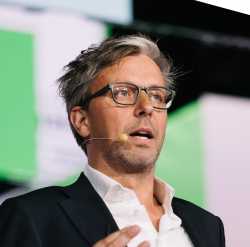 Martin Sobota
 Gazmend Uka
 Nobuo KAWAHARA