20251203T100020251203T1140Asia/RiyadhTrack 4.5: Tactics of Everyday Urbanism: Informalities and Temporalities of PlaceAl Murabba61st ISOCARP World Planning Congressriyadhcongress@isocarp.org
The State’s Tacit Invitation to Informality: The Case of Süleymaniye
Submission Type C: Track Presentation only (Poster optional)Track 4: Culture, Identity, and Inclusive Urban Transformation10:00 AM - 10:10 AM (Asia/Riyadh) 2025/12/03 07:00:00 UTC - 2025/12/03 07:10:00 UTC
One of the most worrying things about global cities is the increasing gap between social classes, economic disparities, and spatial inequalities. Despite this bleak picture, both people and cities create their own paths through informality. Informality is a tricky topic to discuss. While it is often perceived as a problem, it is also recognized as a strategy for survival, adaptation or resistance. Particularly, the state's relationship with informality is complex; sometimes it tries to hinder informality, while at other times it reproduces it. Informal activities and situations manifest directly in certain areas of cities, readily observable to the casual observer. One of these locations is situated in the heart of Istanbul in Süleymaniye World Heritage Site. Süleymaniye is a unique place where informality manifests itself in multiple dimensions and through various practices. In this area, informal activities emerge with the tacit approval of the state which is the primary actor in the reproduction of informality. The area was declared an Urban Renewal Area under Law No. 5366 in 2005. Since then, demolitions and piecemeal housing renewal have been carried out. Due to the absence of a complete transformation, an uncertain process has emerged, positioned between transformation and non-transformation. In some cases, the state feeds uncertainty through the ambiguous process between transformation and non-transformation, thus paving the way for the emergence of grey areas between the legal and the illegal. The invitation of ambiguity is the first step of informality, followed by other stages such as the occupation of houses by disadvantaged groups and the use of vacant areas and public spaces for alternative functions. On the one hand, poorly built structures, poverty-driven lifestyles, and informal activity spaces make deprivation visible; on the other hand, the sudden emergence of luxury developments, which can be considered a product of an informal process, reveals a completely different situation. This contrast clearly reveals the duality of informality, illustrating how the same process unfolds in different forms within the same urban space. Within the scope of this study, spatial transformations resulting from the demolition of existing structures and the subsequent introduction of new land uses will be illustrated using spatial mapping techniques. For instance, large vacant areas created by demolitions have attracted informal economic activities such as paper collection and unregulated car parking, while public spaces in the area have been transformed into zones dominated by second-hand goods vendors. In addition, transformations in the social and spatial structure will be examined through in-depth interviews and field observations. The state's ambivalent role in relation to informality and its impact on urban spaces is a key topic of discussion. This research examines the multifaceted presence of informality in Süleymaniye's urban space, by focusing particularly on the state's role in shaping this process. The impact of the state's changing attitude on urban space and social structure will be discussed.
Presenters Muhammed Ziya Paköz Faculty Member, Istanbul Technical University Co-Authors
When Historic Town Encounters Global Culture: Narratives of Temporary Urbanism in Wuzhen Theatre Festival
Submission Type B: Paper + Track Presentation (Poster optional)Track 4: Culture, Identity, and Inclusive Urban Transformation10:10 AM - 10:20 AM (Asia/Riyadh) 2025/12/03 07:10:00 UTC - 2025/12/03 07:20:00 UTC
Against the backdrop of accelerating globalization and urbanization, urban public spaces serve as crucial intersections of cultural identity and placemaking, fostering inclusive community life and expressions of cultural diversity. Festivals- usually a medium of global culture - may act as key catalysts for temporarily restructuring spatial utilization, activating public life, and eventually optimizing social relationships. Temporary Urbanism – the light, experimental intervention at the urban scale - has the potential be a tool for social integration (Bishop, 2017), since such interim spaces facilitate civic engagement and placemaking. Besides, modernity and globalization have triggered the erosion of traditional place meanings, giving rise to ‘non-places’and ‘placelessness’ (Arefi, 1999). Thus, cultural festivals can reinforce historical and cultural bonds, enhancing people's sense of place identity. This study consequently analyzes how temporary urbanism in the Wuzhen Theatre Festival - propelled by global cultural events - re-engineers community integration paradigms to foster co-evolution of sustainability and place identity. To empirically investigate this phenomenon, our study combines rigorous fieldwork during the festival (Oct 18–20, 2024) and ordinary periods (Mar 29, 2025) with advanced spatial modeling. We documented 37 venues, 46 performances, and 33 commercial nodes, systematically capturing spatial transformations and crowd dynamics. Through SketchUp-based 3D modeling integrating permanent structures with temporary installations — simulated across daily, setup, and performance scenarios — we visualize usage patterns and user flows. Typological analysis across five dimensions (spatial type, morphology, utilization, mobility, service networks) further decodes functional adaptability and vitality mechanisms inherent to temporary urbanism. Our study discovers that during the festival, temporary spaces shift from low-frequency daily use into vibrant "temporary stages" filled with activity, sound, and interaction, altering both usage patterns and emotional attachment among residents and visitors. By concentrating crowds and layering services, the festival reconstructs the social dimension of space, rhythmically reprograms a diverse and inclusive network relationship between the local community and external tourists. This evokes a novel urban temporality characterized by improvisation, rhythm, and collective perception. Therefore, we call for cities to introduce more temporary events to test whether their potential spaces can regenerate and animate urban neighborhoods before deciding on permanent changes. With spatial elasticity, cities can provide more "blank interfaces" to accommodate periodic, event-driven functional transformations. Ultimately, cities can leverage culture to regenerate and animate urban neighborhoods, also activate cultural diversity through event-triggered social interaction. Findings reveal that these ephemeral spaces transcend traditional functions, transforming into arenas for diverse cultural expression. They form complex networks integrating performances, logistics, and commerce. Through synchronous participation of residents and visitors, the spaces become dynamic "containers of identity," strengthening participants' cultural belonging.
Jingyi Qian Nanjing ,China, The Southeast University
The impact of street vendors on the urban inclusive environment: a comparative analysis of various cases.
Submission Type B: Paper + Track Presentation (Poster optional)Track 4: Culture, Identity, and Inclusive Urban Transformation10:20 AM - 10:30 AM (Asia/Riyadh) 2025/12/03 07:20:00 UTC - 2025/12/03 07:30:00 UTC
Street vendors play an essential role in urban economies worldwide, especially in developing countries, where important services or amenities are provided to local communities. Working in the informal sector puts street vendors at risk of vulnerabilities and social marginalization. Due to India’s growing urban migration and shrinking formal sector, street vending and hawking have become crucial sources of income for India's urban poor. Because of its low skill requirements and little financial commitment, vending has become a substantial source of income for many urban poor. The methodology of the study incorporates both virtual (secondary) and live field data collection (primary) of case studies across various urban settings worldwide and tries to explore the intricacies of street vending in the context of urban planning and development by focusing on cases from India and across the globe, with an attention on traffic and pedestrian movement, planning strategies, parking availability and infrastructure provision etc. Through a comparative analysis involving various parameters, studies through literature review and case studies, it aims to bring out the way in which street vending can be managed and integrated in urban areas by using inclusive approaches. This research incorporates both Indian live and virtual case studies. A live field site visit was carried out in Brahmaputra Market (Sector 29), New Brahmaputra Market (Sector 37), and Rehri Market (Sector 17), Chandigarh. These areas depicted both positive and negative development. Virtual case studies of Ahmedabad, Bhopal, and Bhubaneswar revealed an array of policy and implementation strategies. International case studies of Singapore and Cape Town were examined through a virtual case study, which depicted models of better implementation. Although street vending is essential to city economies, successful incorporation needs to be pushed by proactive planning, participatory government, and evident spatial strategies. Indian cities can learn useful lessons from both local experiments and best international practices by adapting them to local contexts. A well-regulated and inclusive approach to vending not only safeguards livelihoods but also improves the quality of public spaces, walkability, and overall urban functionality. By implementing effective policies, providing infrastructure support, and involving vendors in governance, cities can create vibrant urban environments that promote economic growth and social equity.
Presenters Minha Khan Student, Aligarh Muslim University Co-Authors
Performing Time, Shaping Place: Cultural Development and Territorial Identity in Al-‘Ula, Saudi Arabia
Submission Type C: Track Presentation only (Poster optional)Track 4: Culture, Identity, and Inclusive Urban Transformation10:30 AM - 10:40 AM (Asia/Riyadh) 2025/12/03 07:30:00 UTC - 2025/12/03 07:40:00 UTC
This paper examines the cultural-led urban development of Al-‘Ula, a historic oasis in northwest Saudi Arabia, with a focus on how new cultural infrastructures and programmed events intersect with processes of spatial transformation and place-making. Anchored in the state-led Vision 2030 framework and the territorial branding initiative A Journey Through Time, Al-‘Ula is positioned as a planning laboratory for testing new models of cultural expression, heritage valorization, and future-oriented identity building. Through a strategy of “cultural activations” and “experiential placemaking”, archaeological sites and heritage landscapes are reinterpreted as catalytic assets for both international tourism and local urban regeneration. Cultural programming is closely tied to planned landmark institutions—such as the Museum of Contemporary Art, the Valley of Arts (Wadi al Fann), and the Villa Hegra—that are still in the pipeline, linking artistic interventions to speculative urban futures. Our interdisciplinary research team, bringing together expertise from anthropology, geography, and political science, conducted three weeks of collective ethnographic fieldwork in December 2024 and January 2025. We examine how forward-looking planning narratives and staged temporality influence urban morphology, spatial imaginaries, and identity formation. In particular, we analyze how temporary cultural installations and performances in desert settings and around tourism-oriented infrastructures—such as luxury hotels—operate as placemaking tools and as instruments in shaping the public realm. By situating Al-‘Ula as a case study of culture-driven urban transformation, our contribution engages with debates on cultural infrastructure as a lever for urban regeneration, inclusive planning, and socio-spatial change (Track 4). We integrate qualitative methods—participant observation, semi-structured interviews with residents, planners, and creative industry stakeholders—and policy document analysis, including urban design guidelines and architectural briefs. We also reflect on the methodological implications of researching planning processes in flux, where sites function simultaneously as heritage assets, tourism destinations, and zones of accelerated spatial development. More broadly, this case invites reflection on how integrated cultural strategies can reconcile territorial branding objectives with the lived realities of communities navigating rapid urban and social change.
Amin Moghadam Research Lead On Cities And Migration, Toronto Metropolitan University
Rebuilding Identity and Resilience: Participatory Urban Design in Aleppo’s Informal Settlements
Submission Type B: Paper + Track Presentation (Poster optional)Track 4: Culture, Identity, and Inclusive Urban Transformation10:40 AM - 10:50 AM (Asia/Riyadh) 2025/12/03 07:40:00 UTC - 2025/12/03 07:50:00 UTC
This contribution examines the post-war reconstruction of Aleppo through the lens of urban design, focusing on the eastern districts composed of informal settlements that have been devastated during the Syrian conflict. These neighborhoods, although unplanned, represent a rich spatial culture and a vital social fabric, shaped by self-organization, local building traditions, and intergenerational cohabitation. Rather than imposing generic models of redevelopment, this work proposes a context-sensitive design framework that views these areas as cultural heritage worthy not only of preservation but of strategic reinterpretation. The aim is to generate a planning approach that restores identity, fosters resilience, and enhances quality of life by rooting the reconstruction process in the everyday spatial logic of the pre-war city. The methodology emphasizes urban design as a tool of research, using spatial analysis, architectural typology, and iterative design development to propose adaptable structures that reflect local needs and aspirations. A key component is the integration of future residents as active participants in an open-ended building process. This participatory design approach supports spatial evolution over time while responding to urgent housing needs. The resulting vision bridges traditional urban forms with contemporary spatial requirements, supporting compact, socially cohesive, and resilient neighborhoods. In doing so, it advances a model of reconstruction that is not just about rebuilding structures, but about repairing the relationship between people and place. This work speaks directly to the ISOCARP 2025 theme by offering a grounded, practice-based response to urban crisis one that envisions pathways toward resilience, cultural continuity, and inclusive urban futures. Aleppo becomes a global case study for how war-torn cities can regenerate through thoughtful, community-driven urban design
Asser Al Hamoud Independent Researcher, Independent Researcher
Exploring Micro-Renovation of Urban Micro-Spaces Based on Scenario Theory: A Case Study of Mingjiayuan Community in Chongqing
Submission Type B: Paper + Track Presentation (Poster optional)Track 4: Culture, Identity, and Inclusive Urban Transformation10:50 AM - 11:00 AM (Asia/Riyadh) 2025/12/03 07:50:00 UTC - 2025/12/03 08:00:00 UTC
Guided by the important concept of building people-oriented cities, urban renewal is shifting from physical space renovation to people-centered quality improvement, with the cultural attributes and social value of space becoming increasingly prominent. In the process of rapid urbanization, Unit Community, a unique residential form in Chinese cities, are undergoing the painful transition from a familiar society to a society of strangers. The introduction of scene theory has provided a new perspective on urban development—cultural factors and scenes. Integrating scenes into communities and exploring their internal interactive relationships and cultural cohesion is of great significance for revitalizing urban vitality. This paper aims to explore how “Post-Unit Community” can activate the vitality of public spaces through scenario-based micro-upgrades. On one hand, it examines how spatial design can reconstruct the carriers of community cultural identity. On the other hand, while the public green spaces in Mingjiayuan Community have a solid material foundation, low resident participation has led to high maintenance costs and declining spatial vitality, exposing the limitations of traditional spatial upgrade models in terms of reconstructing cultural identity and cultivating social capital. How to establish a synergistic mechanism between social capital cultivation and spatial resilience enhancement is also a key focus of this study. Finally, when applying scenario theory to the renovation of community micro-spaces, it is necessary to explore how to rebuild collective memory anchors through spatial narratives, driving a paradigm shift from physical space restoration to cultural ecological reconstruction in communities. In terms of selecting specific construction sites and understanding resident needs, the author collected and analyzed data through questionnaires, in-depth interviews, on-site observations, and note-taking. For spatial design and on-site construction, the author constructed a translation framework for community-level application based on the research system of scene theory, empowering and revitalizing community scenes through design, co-creation, and activities. This paper uses scenario theory as an entry point, focusing on creating the atmosphere and vitality of community public cultural spaces. By analyzing and summarizing the interactive relationships between “cultural forms, people, and place” as well as the common issues in cultural space design, the paper optimizes and enhances spatial organization methods and resident cultural consensus. Using green spaces (community gardens) as a medium, it reveals the mechanisms by which micro-spatial scenarios shape social relationships, thereby addressing gaps in research on the organization of urban community public cultural spaces under scenario theory. Practically, through adaptive design strategies such as modular planting units and flexible activity spaces, the study creates composite community gardens that balance regional cultural continuity with contemporary lifestyle compatibility. The research findings offer a new paradigm for the coexistence of diverse cultures in high-density urban environments.
Whose City? Placemaking, Citizenship, and Belonging in the Global South: A South Asian Feminist Perspective
Submission Type B: Paper + Track Presentation (Poster optional)Track 4: Culture, Identity, and Inclusive Urban Transformation11:00 AM - 11:10 AM (Asia/Riyadh) 2025/12/03 08:00:00 UTC - 2025/12/03 08:10:00 UTC
In contemporary discourse, urban planning paradigms have increasingly acknowledged the significance of placemaking and citizen led development. However, these conversations are often dominated by Euro American models that overlook the complex socio political and historical dynamics of cities in the Global South. In this special session, we bring together an all women panel of early-career urban scholars and practitioners from South Asia to critically reflect on the intersections of citizenship, migration, identity, and placemaking within the context of southern urbanisms. We center the lived and professional experiences of women from diverse sectors, i.e, academic, community based, and corporate, who are actively shaping and navigating cities undergoing rapid transformation. Our session interrogates how planning processes in the Global South are often shaped by top down visions of development, which mirror neoliberal, gentrified models of the Global North, resulting in the erasure of informal settlements, heritage, and migrant spaces in the name of modernization or progress. This discussion becomes even more pertinent in the context of Riyadh, where rapid urban transformation, in migration, and state driven planning are converging in complex ways. Migration(both internal and transnational) and tourism are reshaping the city's cultural identity and everyday urban life. While contextual placemaking nurtures vibrant and inclusive neighborhoods, it must be rooted in the local context and community voices. Riyadh's evolving identity, shaped by ambitious modernization efforts, limited public participation, and the lived presence of large migrant communities, provides a critical lens for comparison with South Asian cities that are also navigating uneven development, demographic pressures, and contested urban narratives. We aim to use the conference site as a reference point to initiate comparative dialogues with South Asian cities, among others, to understand how migration, cultural identities, and urban heritage shape the politics of who "belongs" in a city. We explore how belonging is produced, negotiated, and denied in urban environments, asking who cities are being built for and whose stories remain unheard. These shifting landscapes place communities in motion and raise critical questions: Who gets to participate, and on whose terms? Who is allowed to lead? Who watches, who performs, and who truly belongs? In many South Asian cities, placemaking is not just a design process; it is deeply political. Who gets to occupy, use, and shape urban space is often contested and negotiated daily, especially by those with precarious or informal citizenship: migrants, informal workers, and women. The panel highlights: How placemaking practices can resist or reinforce exclusion in Global South cities. The lived stress between informal networks and formal planning tools. The emotional and social geographies of displacement, migration, and survival. Comparative urban narratives from across South Asia in conversation with the Gulf. The Panel initiates a conversation about placemaking that transcends tokenistic beautification and re centers local histories, diverse identities, and the everyday right to belong. Ultimately, we argue that there is a need to challenge the epistemic erasure inherent in many placemaking and resilience frameworks, which often overlook local knowledge systems and gendered histories. This special session not only brings alternative voices into ISOCARP's mainstream narrative but also demands a shift in planning pedagogy, one that accounts for contextual, place based identities and recognizes the urbanism of the Global South not as an "other," but as a source of innovation, resistance, and co creation. Placemaking, then, becomes not merely an aesthetic or policy intervention but a process of co creating urban spaces that honour tradition, embrace diversity, and foster a shared sense of belonging, within and across cities of the Global South. It reminds us that the question is not only whose city, but whose voices shape it.
Al Khobar Old Town: Revival of place, memory and community
Submission Type C: Track Presentation only (Poster optional)Track 4: Culture, Identity, and Inclusive Urban Transformation11:10 AM - 11:20 AM (Asia/Riyadh) 2025/12/03 08:10:00 UTC - 2025/12/03 08:20:00 UTC
Situated at the heart of the city, The Khobar Old Town stands as an invaluable piece of urban heritage, once a thriving center of commerce and a vibrant district of robust social bonds. Within its gridded plan, markets, public squares, and narrow streetscapes fostered a strong sense of community. Today, the old town bears the marks of time and evolution; this dynamic urban district has encountered the wear and tear of obsolescence, leading to visual decline, and seeking urban renewal. The Redevelopment of the Khobar Old Town is a transformative urban regeneration project that redefines the relationship between people, architecture, and public space. Rooted in deep community engagement, the project was shaped by the people, ensuring an inclusive and socially responsive urban environment that enhances the quality of life for all. Through an experiential urban trail, the project reactivates public space, connecting key districts with a network of public plazas, pocket parks, and shared streets. Passive climate control strategies, including shaded walkways and green spaces create year-round, multifunctional environments that support local businesses and strengthen social ties. The project emphasizes adaptive reuse, minimizing demolition waste while preserving the city’s historic character. Additionally, green routes encourage eco-friendly mobility, prioritizing pedestrians and cyclists over vehicles to improve accessibility, safety, and well-being. Through its formal language, the project promotes local identity by borrowing traditional motifs in a contemporary context, weaving them into building facades, street furniture, and public space, ensuring a design that respects the spirit of the place and pays homage to the region and its history. Through participatory design, the project revitalizes not just the built environment, but the community itself - restoring the city’s spirit, fostering inclusivity, and setting a global benchmark for people-centered urban regeneration.
Presenters Tareq Fadaak GM, Urban Development, Sharqia Development Authority
Urban Streets as Digital-Physical Assemblages: Towards More Liveable Public Spaces
Submission Type B: Paper + Track Presentation (Poster optional)Track 4: Culture, Identity, and Inclusive Urban Transformation11:20 AM - 11:30 AM (Asia/Riyadh) 2025/12/03 08:20:00 UTC - 2025/12/03 08:30:00 UTC
The contemporary city is increasingly defined by the interplay of physical and digital proximity, a dynamic that reshapes urban street life in profound yet under-explored ways. This theoretical paper examines how this dual geography—where physical spaces overlap with digital networks—alters the social, spatial, and temporal fabric of streets, traditionally seen as theatres of human interaction. Drawing on diverse scholarship, including Madanipur's socio-spatial segregation, Barbosa’s analysis of children’s diminishing urban autonomy, Crang’s colliding temporalities, and Barad’s agential realism, we argue that streets are shifting from spaces of contact to conduits of circulation, exacerbated by digital technologies. While historical conceptions of streets as vibrant, communal arenas clash with modernist efficiency, the rise of e-communication introduces new layers of exclusion and opportunity. Synthesising these perspectives, we propose a conceptual framework that views streets as phenomena—entangled performances of human, material, and digital agencies—rather than static entities. This lens reveals how digital proximity fragments physical togetherness, reducing spontaneous encounters, yet also offers tools (e.g., co-creation, augmented spaces) to reanimate urban life. We address two sub-questions: What new urban design requirements emerge to support this condition, and what are the implications for liveability? The paper contends that reimagining streets demands a balance between connectivity and contact, drawing lessons from resilient urban forms like Venice. This theoretical exploration contributes to urban studies by reframing street life as a contested, evolving assemblage, urging designers and policymakers to prioritise human-scale interaction in an increasingly digital urban future.
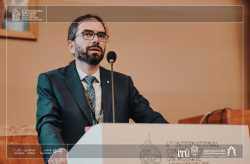 Muhammed Ziya Paköz
 Minha Khan
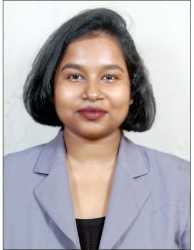 Shradha Chandan
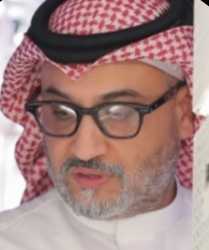 Tareq Fadaak
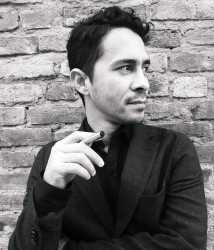 Jose Antonio Lara-Hernandez